
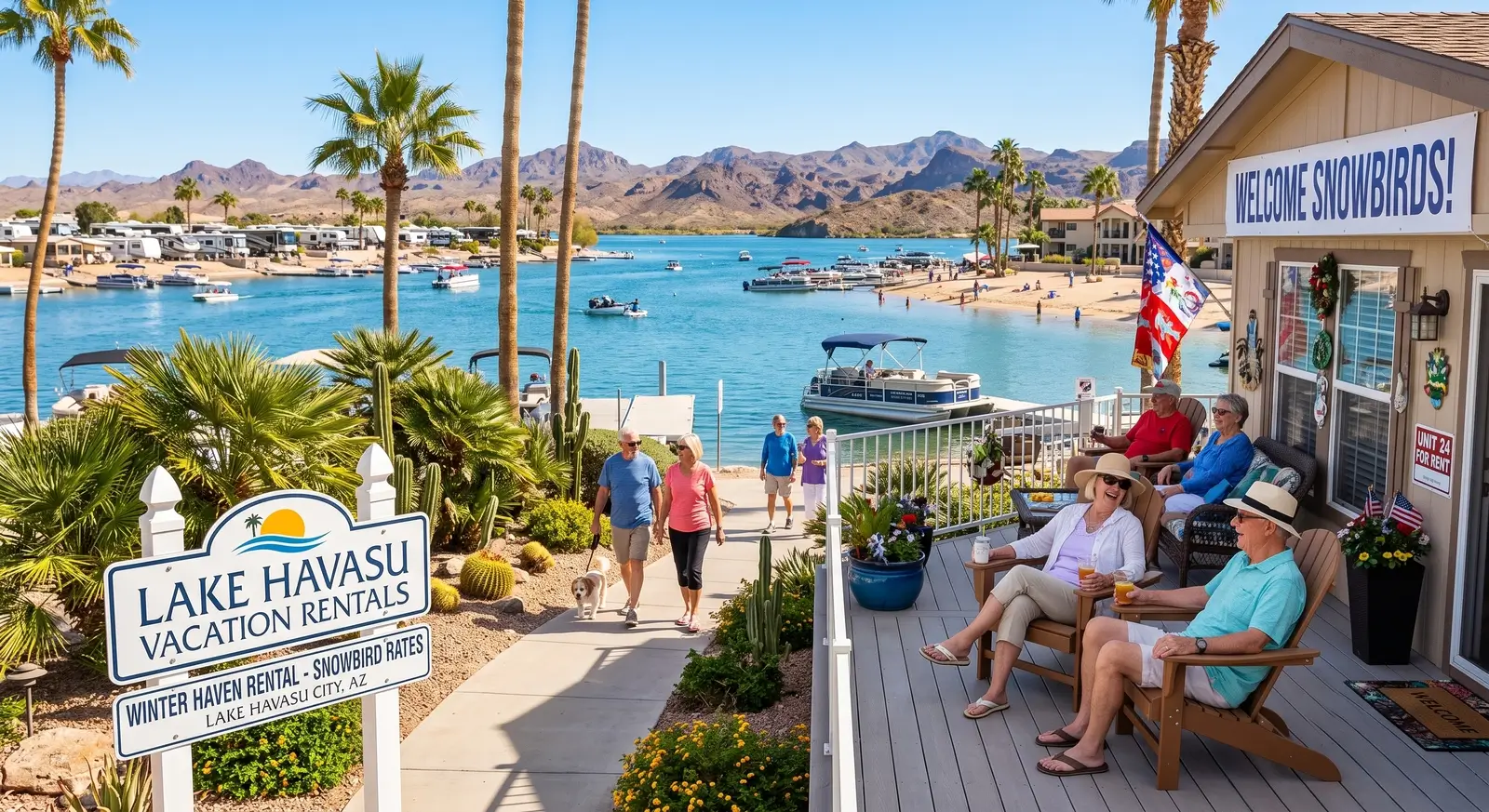
Every October, Lake Havasu starts filling back up. Snowbirds from the Midwest and Pacific Northwest arrive looking for mild winters, lake access, and a break from months of snow and gray skies back home.
For Lake Havasu City landlords, that seasonal wave raises a familiar question every fall. Is this the year to offer a seasonal rental instead of a standard 12-month lease?
We manage properties across Lake Havasu City, so we watch this exact seasonal pattern play out every year. Here is how to think through a Lake Havasu seasonal rental decision clearly, with real local numbers behind it.
Key Takeaways
- Lake Havasu's snowbird season typically runs October through April, drawing retirees and remote workers escaping colder climates.
- Seasonal furnished rentals in Lake Havasu commonly range from about $1,650 to $4,100 a month depending on size, location, and season, usually with a one to three-month minimum stay.
- Some seasonal residents are now extending their stays or transitioning to permanent residency, a real shift worth watching.
- A furnished mid-term seasonal lease is a different product than a nightly short-term rental, and the two markets peak at different times of year in Lake Havasu.
- Some snowbird property owners themselves need summer rental management while they are away, a reverse pattern worth understanding.
Why Lake Havasu Draws So Many Winter Visitors
Lake Havasu and neighboring Bullhead City continue to see steady seasonal population growth from winter visitors, driven by milder winter temperatures, lower housing costs compared to many northern states, and easy access to outdoor recreation along the Colorado River corridor.
Real estate professionals report inquiries starting earlier in the year than in the past, particularly from residents of colder Midwest and Pacific Northwest states looking to lock in seasonal rental housing before the season begins.
Booking platforms serving the snowbird market report that October through April dates are often secured months in advance, which means marketing a seasonal Lake Havasu rental in the summer, not the fall, tends to capture the strongest demand.
What Counts as Snowbird Season in Lake Havasu
Snowbird season in Lake Havasu generally runs from October through April, with the heaviest demand concentrated between December and March. This is distinct from Lake Havasu's summer boating and tourism season, which draws a completely different type of visitor and a completely different rental product.
Understanding which season you are actually marketing toward matters more than it might seem, since the pricing strategy, minimum stay requirements, and target renter all shift depending on which half of the year you are in.
A Notable Shift This Year: Longer Stays
One trend worth watching closely is that some seasonal residents are extending their stays or transitioning to permanent residency rather than returning north each spring. County registration data reportedly shows increased vehicle registrations and property tax filings from former out-of-state residents, a signal that at least some of this seasonal population is becoming more permanent.
If that trend continues, it could gradually shift some seasonal demand toward standard long-term leasing rather than short winter stays, which is worth factoring into your planning even if it plays out slowly.
Local governments have also continued investing in road maintenance, public safety, and recreational amenities, which supports the broader case that this growth is being treated as a long-term trend rather than a temporary bump.
What a Lake Havasu Seasonal Rental Actually Looks Like
A seasonal lease for winter visitors is typically a furnished, mid-term arrangement rather than a nightly short-term rental booked through a platform. Current Lake Havasu seasonal rental listings commonly range from around $1,650 a month for a smaller, centrally located home to $3,700 to $4,100 a month for a larger furnished property with pool access or lake views, with most listings requiring a minimum stay of one to three months.
Pricing in this market also flexes seasonally within the snowbird window itself. Many owners charge their highest rate for the December through March peak, a somewhat lower rate for the October through November and April shoulder months, and a separate, often lower, rate if the property is available for a full winter season under a single lease.
Seasonal Lease vs. Short-Term Rental: Know the Difference
This distinction matters, and most owners miss it when they first consider offering a seasonal lease. A furnished, month-to-month winter rental is not the same market as a nightly Airbnb-style short-term rental, and Lake Havasu's short-term rental data actually peaks in a different season, with average daily rates highest in July and lowest in November, driven by summer lake tourism rather than winter snowbird demand.
Median nightly short-term rental rates in Lake Havasu run around $266 a night, with top-performing properties commanding $495 or more, but typical occupancy sits closer to 33 percent year-round. A furnished seasonal lease, by contrast, trades some of that peak nightly rate for a longer, more predictable booking during exactly the months when nightly demand is weaker.
For many owners, the two strategies work best as complements rather than a strict either-or choice year-round.
The Trade-Offs You Need to Plan For
A seasonal rental strategy means furnishing the unit, turning it over more often between tenants, and accepting a real risk of vacancy during the slower summer months when snowbird demand disappears almost entirely.
Booking lead times also run longer for winter stays, often well ahead of the season itself, which means marketing needs to start months before October actually arrives, not once fall shows up on the calendar. Wear and tear also accelerates with more frequent turnover. Furniture, appliances, and linens all see more use across multiple short tenancies than they would with a single long-term tenant staying for years.
Who Snowbirds Actually Are, and What They Want
Most snowbirds are retirees looking for a specific lifestyle for a few months, not tourists passing through for a weekend. Proximity to healthcare facilities, low-maintenance yards, single-story layouts, and quiet neighborhoods all matter more to this group than trendy finishes.
Many arrive from the same handful of northern states and Canadian provinces year after year, often returning to the same city or even the same neighborhood. A property that delivers a good experience one season often earns a repeat booking the next, reducing your marketing burden over time.
Understanding this tenant profile shapes everything from furniture choices to marketing. Our marketing approach for seasonal listings targets this exact demographic rather than a generic renter audience.
The Reverse Pattern Worth Knowing
Not every seasonal rental situation runs the direction you might expect. Some snowbird property owners who occupy their own Lake Havasu home each winter need help renting it out during the summer months while they return north, essentially flipping the typical seasonal rental calendar.
Property management demand for exactly this kind of arrangement has grown alongside the broader snowbird trend. Whether you are renting to winter visitors or managing a summer rental for a seasonal homeowner, the underlying skill set, furnished-property marketing, tighter turnover management, and seasonal pricing, is the same.
Pricing Your Seasonal Rental Correctly
Given the wide range in current Lake Havasu seasonal rental rates, from roughly $1,650 to over $4,000 a month, pricing correctly for your specific property, location, and season matters enormously. Our ROI calculator can help you compare the seasonal revenue potential against a standard long-term lease for your specific property.
Should You Convert to a Seasonal Lease This Year?
A seasonal strategy tends to work best for a furnished-ready property in a location that genuinely appeals to winter visitors, paired with an owner comfortable with more active turnover and marketing between seasons.
It tends to work less well for an owner who wants the simplicity of a single long-term tenant and minimal year-round involvement, or for a property that would need substantial furnishing investment to compete with the current seasonal inventory.
Frequently Asked Questions
How long does snowbird season typically last in Lake Havasu?
It generally runs from October through April, with the heaviest demand between December and March. Some visitors are now staying longer or transitioning to permanent residency, according to recent local trend reporting.
What is a typical rent for a seasonal rental in Lake Havasu?
Current listings commonly range from around $1,650 a month for a smaller property to $3,700 to $4,100 a month for a larger furnished home with a pool or lake views, usually with a one to three month minimum stay.
Is a seasonal lease the same as a short-term vacation rental?
Not exactly. A seasonal lease is typically a furnished, mid-term arrangement of a month or longer, while a short-term rental usually involves nightly bookings through a platform, carries different regulatory considerations, and actually peaks in the summer boating season rather than winter.
Do I need to furnish my property for a seasonal lease?
Yes, in most cases. Winter visitors generally expect a move-in-ready, furnished home, which is part of why seasonal leases can command a premium over standard unfurnished rentals.
What happens to my property during the off-season if I go seasonal?
Off-season vacancy is the main trade-off. Some owners fill the gap with a summer short-term rental strategy, while others accept a vacant stretch in exchange for the winter premium.
Can a property manager help me rent out my home while I am away for the summer?
Yes. This reverse pattern, where a seasonal homeowner needs summer rental management, has become more common, and a property manager can handle the marketing, screening, and turnover on your behalf.
How far in advance should I market a Lake Havasu seasonal rental?
Given how far ahead winter dates tend to get booked in this market, starting your marketing in the summer, well before the October season begins, typically captures stronger demand than waiting until fall.
Let Us Help You Decide
Lake Havasu's winter visitor season is a real opportunity, but it is not automatically the right fit for every property or every owner. The numbers behind a seasonal rental strategy vary enough by property and location that a general answer rarely fits every situation.
At Arizona Living Rentals and Property Management, we help owners across Lake Havasu City weigh seasonal leasing against standard long-term rental strategies with real local data. If you are considering this move for the upcoming season, request a free rental analysis, or explore our owner resources to see how we help owners choose the right strategy.